
Dr. Heather E. Eves
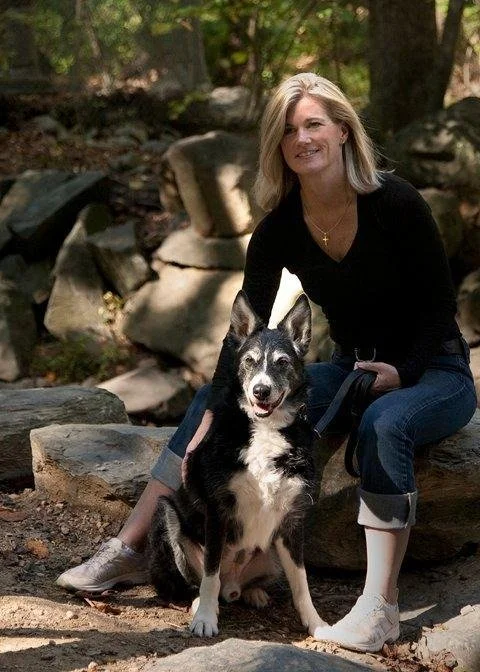
Professor of Practice, Virginia Tech; Certified Conservation Coach, CCNet
Doctorate of Forestry and Environmental Studies, Yale University
M.S. Wildlife Science, New Mexico State University
B.S. Animal Science/Pre-Veterinary Medicine, University of New Hampshire
Email: heather@heathereevesllc.com
Dr. Heather E. Eves is actively engaged with opportunities working in and supporting effective teams, coaching conservation professionals, and in pursuit of evidence-based problem-solving in conservation and development. She is a wildlife biologist, conservationist, and coach, having studied and worked internationally with a focus on Africa since 1985 and the Caribbean since 2012. She consults on wildlife conservation and capacity development projects and teaches graduate and undergraduate courses at several universities in the US, Africa, and the Caribbean.
Heather runs a professional coaching business, Heather E. Eves, LLC, where, as a Certified Coach from an ICF-accredited program, she coaches professionals in their career and life planning. Additionally, she is one of 30 Certified Conservation Coaches with the Conservation Coaches Network and trains teams in planning conservation projects using the Conservation Standards – a training she has offered to field teams internationally since 2008 and at Virginia Tech Center for Leadership in Global Sustainability (CLiGS) since 2010 as a Professor of Practice.
Her doctorate from Yale School of the Environment focused on the Central African bushmeat trade, wildlife conservation, community wellbeing, and policy sciences. Her master’s research through New Mexico State University (affiliated with University of Nairobi) focused on gamebird hunting management and community engagement in Kenya. She has successfully developed, led, and supported emerging conservation leadership fellowship programs and mentored countless students from the US, Africa, and the Caribbean. She has received two Fulbright Awards as a graduate student and as a Senior Specialist. Following a ten-year career in research and conservation in Africa, Heather was Director of the Washington DC-based Bushmeat Crisis Task Force (2000-2009) – a collaborative of 36 conservation non-profit organizations that worked together to raise awareness and provide support in addressing the impacts of the unsustainable bushmeat trade.
She has extensive experience in program management, field research, capacity-building, fundraising, conservation project design and planning (Conservation Standards, Miradi), partnership development, policy, media, and communications. Heather is a member of the IUCN/SSC Antelope Specialist Group and Primate Specialist Group Subgroup on Great Apes and is a Subject Editor for the African Journal of Ecology. She is a Director on the Board of the William Holden Wildlife Foundation, which operates a wildlife education center in Nanyuki, Kenya that welcomes over 12,000 students annually. She has served on the Editorial Advisory Board of The Wildlife Society’s The Wildlife Professional, a Board Member of the Emerging Wildlife Conservation Leaders fellowship program (2004-2012), Board Member of the Conservation Leadership in the Caribbean fellowship program (2012-2018), and former ProjectWILD Facilitator.
Teaching
-
Ingram, D.J., Coad, L., Milner-Gulland, E.J., Parry, L., Wilkie, D., Bakarr, M.I., Benitez-Lopez, I., Bennett, E.L., Bodmer, R., Brashares, J., Cowlishaw, G., Bizri El, H., Eves, H.E., Fa, J.E., Golden, C.D., Iponga, D.M., Van Minh, N., Morcatty, T.Q., Mwinyihali, R., Nasi, R., Niman, V., Ntiamoa-Baidu, Y., Pattiselanno, F., Peres, C., Rao, M., Robinson, J.G., Rowcliffe, M., Stafford, C., Supuma, M., Tarla, F.N., van Vliet, N., Wieland, M., Abernethy, K.A. (2021). Progress in wild meat research, policy and practice from 2002-2020: Wild meat is still on the menu. Annual Review of Environment and Resources. 46. Available From: https://www.annualreviews.org/doi/abs/10.1146/annurev-environ-041020-063132
Tallis, H., Kreis, K., Olander, L., Ringler, C.,…Eves, H.E…(+124 co-authors) (2019). Aligning evidence generation and use across health, development, and environment. Current Opinion in Environmental Sustainability. 39:81-93. doi: https://doi.org/10.1016/j.cosust.2019.09.004
Verissimo, D, Schmidt, C., Kimario, F. and Eves, H.E. (2018). Measuring the impact of an entertainment-education intervention to reduce demand for bushmeat. Animal Conservation, 21(4), 324-331. doi: https://doi.org/10.1111/acv.12396
Tallis H, Kreis K, Olander L, Ringler C et al. (2017). Bridge Collaborative Practitioner’s Guide: Principles and Guidance for Cross-sector Action Planning and Evidence Evaluation. Washington DC: The Nature Conservancy. (Eves, H.E.: Reviewer). Available From: http://bridgecollaborativeglobal.org/wp-content/uploads/2017/10/Bridge-Collaborative-Principles-and-Guidance-2017.pdf
Bair-Brake, H., T. Bell, A. Higgins, N. Bailey, M. Duda, S. Shapiro, H.E. Eves, N. Marano, and G. Galland. (2013). Is That a Rodent in Your Luggage? A Mixed Method Approach to Describe Bushmeat Importation into the United States. Zoonoses and Public Health. doi: 10.1111/zph.12050
Lindsey, P., Balme, G., Becker, M., Begg, C., Bento, C., Bocchino, C., Dickman, A., Diggle, R., Eves, H., Henschel, P., Lewis, D., Marnewick, K., Mattheus, J., McNutt, J.W., McRobb, R., Midlane, N., Milanzi, J., Morley, R., Murphree, M., Nyoni, P., Opyene, V., Phadima, J., Purchase, N., Rentsch, D., Roche, C., Shaw, J., van der Westhuizen, H., Van Vliet, N., Zisadza, P. (2013). The bush-meat trade in African savannas: impacts, drivers, and possible solutions. Biological Conservation 160:80-96.
Lindsey, P., Balme, G., Becker, M., Begg, C., Bento, C., Bocchino, C., Dickman, A., Diggle, R., Eves, H., Henschel, P., Lewis, D., Marnewick, K., Mattheus, J., McNutt, J.W., McRobb, R., Midlane, N., Milanzi, J., Morley, R., Murphree, M., Nyoni, P., Opyene, V., Phadima, J., Purchase, N., Rentsch, D., Roche, C., Shaw, J., van der Westhuizen, H., Van Vliet, N., Zisadza, P. (2012). Illegal hunting and the bush-meat trade in savanna Africa: drivers, impacts and solutions to address the problem. Panthera/ Zoological Society of London/ WildlifeConservation Society report, New York. 74 pages. [Available From: http://www.fao.org/3/a-bc609e.pdf ]
Eves, H.E., N. Gelman, and M. Wieland. (2012). Addressing Africa’s bushmeat crisis: BEAN: the Bushmeat-free Eastern Africa Network. The Wildlife Professional Summer:48-49.
Bailey, N.D., H.E. Eves, and BCTF. (2010). Bushmeat. The Encyclopedia of Applied Animal Behavior and Welfare. CABI Publishing.
Eves, H.E., and R. P. Watson. (2009). Earth’s cornucopia: wild foods. Pages 183-188 in J.A. McNeely, R.A. Mittermeier, T.M. Brooks, F. Boltz, and N. Ash (editors). The Wealth of Nature: Ecosystem Services, Biodiversity, and Human Well-Being. CEMEX Conservation Book Series. ILCP, Arlington, VA, USA.
Eves and Eves. (2009). BEAN Communications Package [12 BEAN Bushmeat Fact Sheets, CD and related materials]. Bushmeat-free Eastern Africa Network. [Available from: www.bushmeatnetwork.org]
Hutchins, M., H.E. Eves, C. Mittermeier. (2009). Fueling the conservation engine: where will the money come from to drive fish and wildlife management and conservation. Pages 184-197. In: Society and Wildlife in the 21st Century: Human Dimensions of Natural Resources Management, M.J. Manfredo, J.J. Vaske, P. Brown, D.J. Decker, and E.A. Duke (eds.) Island Press, Washington DC.
Eves, H.E., M. Hutchins and N.D. Bailey. (2008). Chapter 17: The Bushmeat Crisis Task Force (BCTF). Pages 327-344. In: Conservation in the 21st Century: Gorillas as a Case Study, T.S. Stoinski, H.D. Steklis and P.T. Mehlman (eds.). Springer, New York, NY.
Kohn, A.E. and H.E. Eves. (2007). The African bushmeat crisis: a case for global partnership. Environs Environmental Law and Policy Journal 30(2):245-274.
Bailey, N.D. and H.E. Eves. (2006). The Bushmeat Crisis Task Force: roles and resources for conservation collaboration. Nature & Faune 21(1):16-17.
Eves, H.E. (2006). The Bushmeat Crisis in Central Africa: Resolving a Common Pool Resource Problem in the Common Interest. Doctoral Dissertation. School of Forestry and Environmental Studies. Yale University. New Haven, CT. 506 Pages.
Eves, H.E. (2006). The bushmeat trade in Africa: conflict, consensus and collaboration. Pages 141-152. In D.M. Lavigne Gaining Ground In Pursuit of Ecological Sustainability Guelph, Canada: International Fund for Animal Welfare, Guelph, Canada and University of Limerick, Limerick, Ireland.
R.G. Ruggiero, H.E. Eves, N.D. Bailey, A.Tobiason, E.L. Bennett. (2006). Case Study 8.2 The Bushmeat Crisis Approaches to Conservation. Pages 280-283. In M. J. Groom, G.K. Meffe, and C.R. Carroll (ed.). Principles of Conservation Biology 3rd Edition. Sinauer Associates, Inc. Sunderland, MA.
Eves, H.E. and C.M.Wolf. (2005). Forum Ethics of hunting: perspectives on the bushmeat trade in Africa. Frontiers in Ecology and the Environment 7(3):394-395.
Bailey, N.D., H.E. Eves, D.S. Wilkie, J. Wallis, C.M. Wolf and BCTF. (2005). The Pan-African Bushmeat Crisis: Sub-Regions, Sustainability and Solutions. Proceedings of the College of African Wildlife Management's 40th Anniversary Symposium: "Conservation in Crisis: Experiences and Prospects for Saving Africa's Natural Resources." Mweka, Tanzania: College of African Wildlife Management.
BCTF (Eves, H.E., Bailey, N.D. and A.W. Tobiason). (2004). BCTF Phase I Report: 2000-2004. Bushmeat Crisis Task Force. Washington DC. 163pp.
Eves, H.E., Natalie D. Bailey, Andrew Tobiason. (2003). BCTF: Moving Forward. Communiqué December 2003: 33-35.
Milner-Gulland, E.J., E.L. Bennett, K. Abernethy, M. Bakarr, R. Bodmer, J. Brashares, G. Cowlishaw, P. Elkan, H. Eves, J. Fa, C. Peres, C. Roberts, J. Robinson, M. Rowcliffe and D. Wilkie. (2003). Wild meat: the bigger picture. TRENDS in Ecology and Evolution 18(7):351-357.
Wilkie, D.S., E.L. Bennett, H.E. Eves, M. Hutchins, C. Wolf. (2002). Roots of the bushmeat crisis: eating the world’s wildlife to extinction. Communiqué November 2002: 6-7.
Bennett, E., H. Eves, J. Robinson, and D. Wilkie. (2002). Why is eating bushmeat a biodiversity crisis. Conservation in Practice 3(2):28-29.
Bennett, E.L., E.J. Milner-Gulland, M. Bakarr, H.E. Eves, J.G. Robinson and D.S. Wilkie. (2002). Hunting the world’s wildlife to extinction. Oryx 36(4):328-329.
Eves Eves, H. E., N.D. Bailey, and M. Hutchins. (2002). The Bushmeat Crisis Task Force: collaboration across sectors and continents to address the bushmeat crisis. Communiqué November 2002: 19-21.
H.E. and A. Stefan. (2002). Bushmeat Crisis Task Force – collaborative action planning toward addressing the bushmeat crisis in Africa. Pages 103-116. In: S. Mainka and M. Trivedi (eds.) Links between Biodiversity Conservation, Livelihoods and Food Security: The sustainable use of wild species for meat. Occasional Paper of the IUCN Species Survival Commission No. 24. The World Conservation Union. Gland, Switzerland and Cambridge, UK.
Eves, H.E. and R.G. Ruggiero. (2002). Antelopes in Africa: bushmeat, game meat and wild meat – a question of sustainability. Pages 73-84. In: S. Mainka and M. Trivedi (eds.). Links between Biodiversity Conservation, Livelihoods and Food Security: The sustainable use of wild species for meat. Occasional Paper of the IUCN Species Survival Commission No. 24. The World Conservation Union. Gland, Switzerland and Cambridge, UK.
Eves, H.E., E.A. Gordon, J.T. Stein, T.W. Clark. (2002). Great ape conservation in Central Africa: addressing the bushmeat crisis. Endangered Species UPDATE 19(4):171-178.
Eves, H.E. and M. Hutchins. (2001). The Bushmeat Crisis Task Force: cooperative U.S. efforts to curb the illegal commercial bushmeat trade in Africa. Pages 181-186. In: Conway W.G., M. Hutchins, M. Souza, Y. Kapetanakos, E. Paul (eds.) The AZA Field Conservation Resource Guide. Zoo Atlanta 323p.
Eves, H.E. and M.I. Bakarr. (2001). Chapter 4: Impacts of bushmeat hunting on wildlife populations in West Africa’s Upper Guinea Forest ecosystem. Pages 39-57. In: M.I. Bakarr, G.A.B. da Fonseca, R. Mittermeier, A.B. Rylands, and K. Walker-Painemilla (eds.) Hunting and Bushmeat Utilization in the African Rain Forest Perspectives Toward a Blueprint for Conservation Action. Advances in Applied Biodiversity Science Number 2. Center for Applied Biodiversity Science, Conservation International, Washington DC.
Eves, H. E. (2000). Duikers: A Primary Target for Africa's Bushmeat Trade. Animal Keepers' Forum 27, no. 11:497-505.
Eves, H.E. and R.G. Ruggiero. (2000). Socioeconomics and Sustainability of Hunting in the Forests of northern Congo. Pages 427-454. In. J.G. Robinson and E. Bennett (eds.) Hunting for Sustainability in Tropical Forests. Columbia University Press. New York.
Eves, H.E. (1999). Collaboration In-Situ and in Washington to Sustain African Wildlife. Presentation given: 14 August 1999 at the African Bushmeat Workshop, American Society of Primatologists Annual Meeting, New Orleans, Louisiana.
Eves, H.E., R. Hardin, and S. Rupp. (1998). Resource Use Relations in the Trinational Sangha River Region: Histories, Knowledge Forms, and Institutions/ Utilisation des Ressources Naturelles dans la Région Trinationale de la Sangha: Histoires, Savoirs, et Institutions. Volume 102. Yale School of Forestry and Environmental Studies Bulletin Series, New Haven. 597 Pages. Available from: http://www.umich.edu/~infosrn/SRN_TEXT/cnf_text/97conf_yale_txt.html
Hardin, R., H.E. Eves, and S. Rupp. (1998). The Sangha River Network: Applying Inter-disciplinary Academic Debates to Real Environment and Development Dilemmas. Yale Center for International and Area Studies Working Paper D&E 18, New Haven, CT.
Ruggiero, R.G. and H.E. Eves. (1998). Bird-mammal associations in forest openings of the northern Congo (Brazzaville). African Journal of Ecology 36:183-193.
Ruggiero, R.G. and H.E. Eves. (1998). On Emerald Pond. Wildlife Conservation 101(1): 36-41.
Eves, H.E. (1997). Socio-economics of Wildlife Use in northern Republic of Congo. Presented to: Yale University Pier-African Studies Summer Institute, 1997 - “The Teaching of Africa”, African Environmental Issues and Policies.
Eves, H.E. (1996). Socioeconomic Study 1996 Nouabalé-Ndoki National Park Northern Congo. Unpub. Report to The Wildlife Conservation Society and The World Bank. 150pp.
Eves, H.E. (1995). Pilot Study Investigation of Socioeconomics of Natural Resource Utilization in the Kabo Logging Concession Northern Congo. Unpub. Report to The Wildlife Conservation Society and The World Bank. 76pp.
Eves, H.E. (1994). Investigation of a Monitoring System for Yellow-necked Spurfowl (Francolinus leucoscepus) on a Game Ranch in Kenya. Master of Science Thesis. New Mexico State University, Las Cruces, NM. 172 Pages.
Fowler, J.M., H.E. Eves, and J. Knight. (1994). Wildlife ranching: a means of attracting capital into agriculture. Pages 229-235. in W. van Hoven, H. Ebedes, and A. Conroy, editors. Wildlife Ranching A Celebration of Diversity. Proceedings of the Third International Wildlife Ranching Symposium. Promedia, Pretoria, South Africa.
Engagement with the public and key-decision makers through multiple fora including dozens of presentations and conservation collaboration activities in the US, Europe, and Africa including: symposia (2002 and 2004) of the Society for Conservation Biology, Convention on Biological Diversity (CBD) technical meetings (2001, 2009, 2011), collaboration on bushmeat issues through the Convention on International Trade in Endangered Species of Wild Fauna and Flora (CITES) Bushmeat Working Group (2000-2004), presentations to European Parliament (2011), Southern African Development Community (SADC) (2012), and Latin America and Caribbean Congress for Conservation Biology (2018). Contributions to hearings and briefings for the US House of Representatives. Contributions to dozens of media (including radio and TV) articles on the bushmeat crisis including TIME Magazine, Science, Smithsonian, Newsweek, National Geographic, New York Times, The Grio, Current TV and many others.
Recent Media: (2022) https://cligs.vt.edu/blog/mnr-students-team-up-with-international-ngo-to-help-support-cons.html
(2022) https://cligs.vt.edu/blog/independent-study-elective-course-equips-mnr-students-with-appli.html