

Why Do Bears Rub? Exploring One of Wildlife's Most Intriguing Behaviors
Wednesday, September 9 at 5:30 p.m. ET
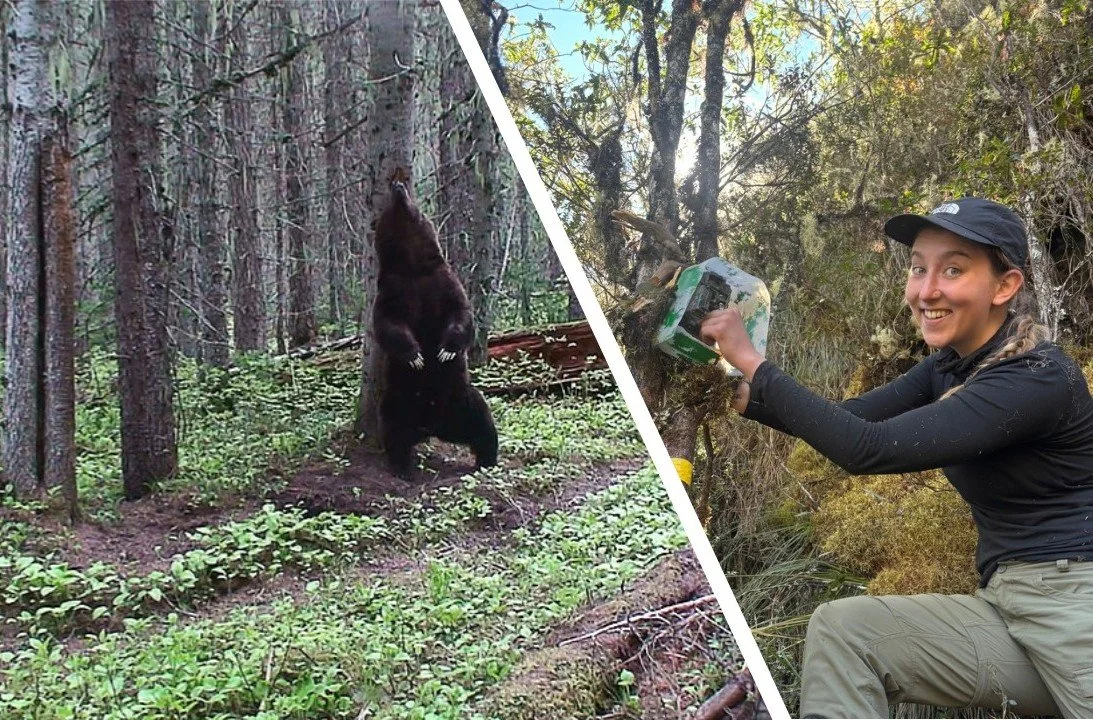
Miranda Many is a Ph.D. student in Biology at Old Dominion University
Presentation Summary
Why do bears rub against trees, fence posts, power poles, and all sorts of other things? For decades, biologists have proposed a variety of explanations, yet the answer remains surprisingly elusive.
In this Wildlife Wednesday presentation, Miranda Many explores the fascinating world of bear rubbing, from the remarkable sense of smell that shapes bear behavior to the competing hypotheses scientists have proposed to explain this familiar yet still mysterious behavior. She'll also discuss how bear rubbing has become an important tool for non-invasive wildlife research and why a fresh look at the scientific evidence suggests we know far less than many people think. Along the way, you'll enjoy plenty of entertaining remote-camera footage capturing bears behaving naturally when they think no one is watching, offering a rare glimpse into one of wildlife's most captivating behaviors.
Presenter Bio
Miranda Many is a Ph.D. student in Biology at Old Dominion University, where she studies wildlife ecology under Dr. Laura Grieneisen. She earned her bachelor's degree in Biology, with a minor in Chemistry, from Berry College, graduating summa cum laude. Her field experience spans Peru, Iceland, Spain, and the southeastern United States, where she has worked on projects involving Andean bears, carnivores, marine mammals, camera trapping, wildlife monitoring, and conservation. Miranda is a co-author of a comprehensive review of bear rubbing behavior, conducted by the Center for Wildlife Studies, examining how a better understanding of this remarkable behavior can improve non-invasive wildlife research and strengthen conservation. She is passionate about wildlife behavior, scientific rigor, and helping bridge the gap between ecological research and practical conservation.