
 Image 1 of 1
-
Management of human-wildlife conflicts is considered to be one of the most challenging tasks for wildlife management agencies around the world. Like all real-world problems, addressing human-wildlife conflict requires transdisciplinary thinking and combining knowledge in new and interesting ways. Dr. Can blends scientific evidence of several academic disciplines (e.g., ecology, wildlife management, psychology, cognitive neuroscience) and 25 years of real-world experience to help participants develop a deep and holistic understanding of human-wildlife conflicts and equip them with the practical skills necessary to develop human-wildlife conflict management plans.
Students will learn by (1) watching pre-recorded lectures, (2) critically examining the uniquely curated course material (peer reviewed articles, gray literature, videos), (3) working on individual and small group assignments, and (4) participating in live 2-hr group discussions on the weekends that are recorded (Q&A sessions).
-
Spring: January 19 – May 2, 2027 (Early bird* ends December 20th)
*Early bird saves at least $75
Learn at your own pace (watch prerecorded lectures and videos, read papers, and participate in discussions) with instructor support**.
Live meetings (also recorded) at 2:00-4:00 PM US Eastern Time during the first 4 weeks:
January 24, live Q&A session
January 31, live Q&A session
February 6, live session
February 7, live session
February 13, live session
February 14, one-on-one meetings with Dr. Can (by appointment)
**Live interaction with the instructor is limited to the first month of the course.
-
None, but having sense of humor, open-mindedness and critical thinking skills would be helpful.
-
Analyze underlying structural and institutional dimensions of human–wildlife conflict beyond commonly presented explanations.
Interpret how neural and cognitive processes shape conflict perception, emotional responses, and escalation dynamics.
Trace and evaluate the evolution of conflict resolution theory from its origins in international politics to its application in wildlife management.
Compare and contrast human–wildlife conflict dynamics in Western and non-Western contexts, identifying contextual drivers and governance differences.
Evaluate crisis management responses in human–wildlife conflict cases, considering the roles of stress, trauma, and empathy.
Assess the roles and interests of stakeholder and power dynamics—including local communities, wildlife managers, academics, and NGOs—and evaluate their influence in conflict situations.
Apply design thinking principles to structure a human–wildlife conflict management process.
Select and justify appropriate conflict management tools and principles for specific human–wildlife conflict scenarios.
Evaluate existing human–wildlife conflict management plans using ecological, social, and governance criteria.
Develop a structured human–wildlife conflict management plan that integrates design thinking and appropriate management tools.
Formulate and justify a project idea, career plan, or professional development strategy informed by course concepts and feedback.
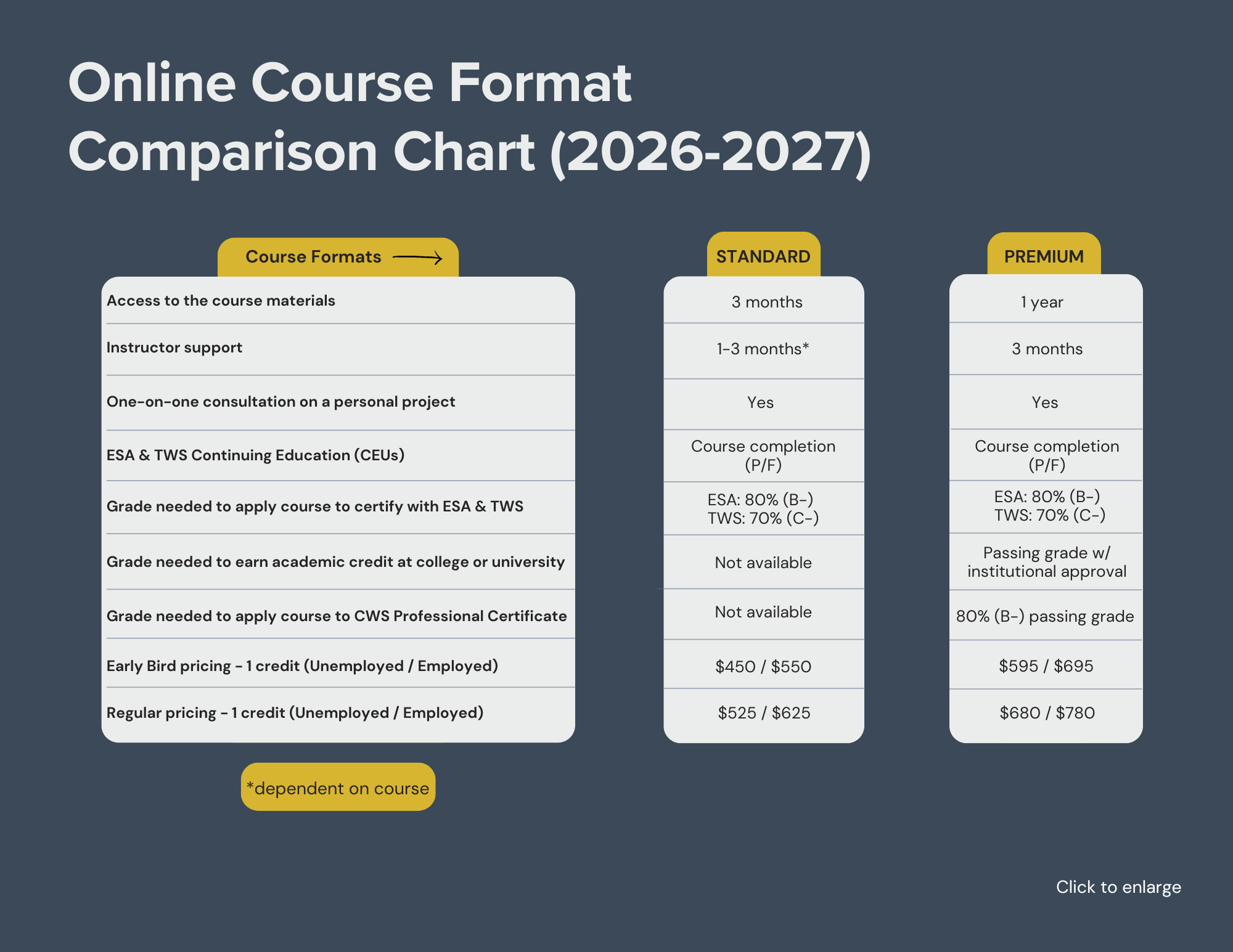
COURSE OPTIONS & INFORMATION (Review chart above, then click below)
-
FORMAT:
3 months of access to course materials
Get instructor support for one month term via email, discussion threads, group meetings, and one-on-one appointments
After working through the course materials, set up an optional meeting with the instructor to discuss your own personal project from work or school
CONTINUING EDUCATION:
16 CEUs with The Wildlife Society
4 CEUs in Category I(a): Scientific Education and Training with the Ecological Society of America (go to our Continuing Education Page for more details)
-
FORMAT:
12 months of access to course materials
Get instructor support for the 3-month term via email, discussion threads, group meetings, and one-on-one appointments
After working through the course materials, set up an optional meeting with the instructor to discuss your own personal project from work or school
CONTINUING EDUCATION:
16 CEUs with The Wildlife Society
4 CEUs in Category I(a): Scientific Education and Training with the Ecological Society of America
Go to our Continuing Education Page for more details
CERTIFICATIONS:
Earn 1 credit towards a professional certificate in Conservation Planning with CWS
ACADEMIC CREDIT:
Earn 1 academic credit (go to our Academic Credit Page for details)
Earn an additional 1-2 academic credits with an Applied Project

Associate Professor, Ankara University, Türkiye; Member of multiple IUCN SSC Specialist Groups, including the Human–Wildlife Conflict and Coexistence Specialist Group and the Bear Specialist Group

The course was transdisciplinary and extremely thought-provoking. Despite working in HWC mitigation for almost a decade, I’d never come across a narrative that considers the trauma of conflict or highlights the importance of crisis management and empathy in this way. Because of this, it has 100% been the most exciting and empowering course I’ve ever been part of and has already been extremely beneficial in informing our HWC Strategy in Zambia and helping me to better articulate our objectives to key stakeholders.
The course is also just very well constructed in terms of the resources provided, video content, recommended reading, the review of Management Plans and live sessions - the Q&As with Dr. Can being the highlight! He has such a thoughtful, passionate, and patient approach to teaching, and it was a real privilege to discuss my work with him and to hear about his experiences in the field.
Jeni Vanhoucke
Director, Community Outreach Programme, Game Rangers International
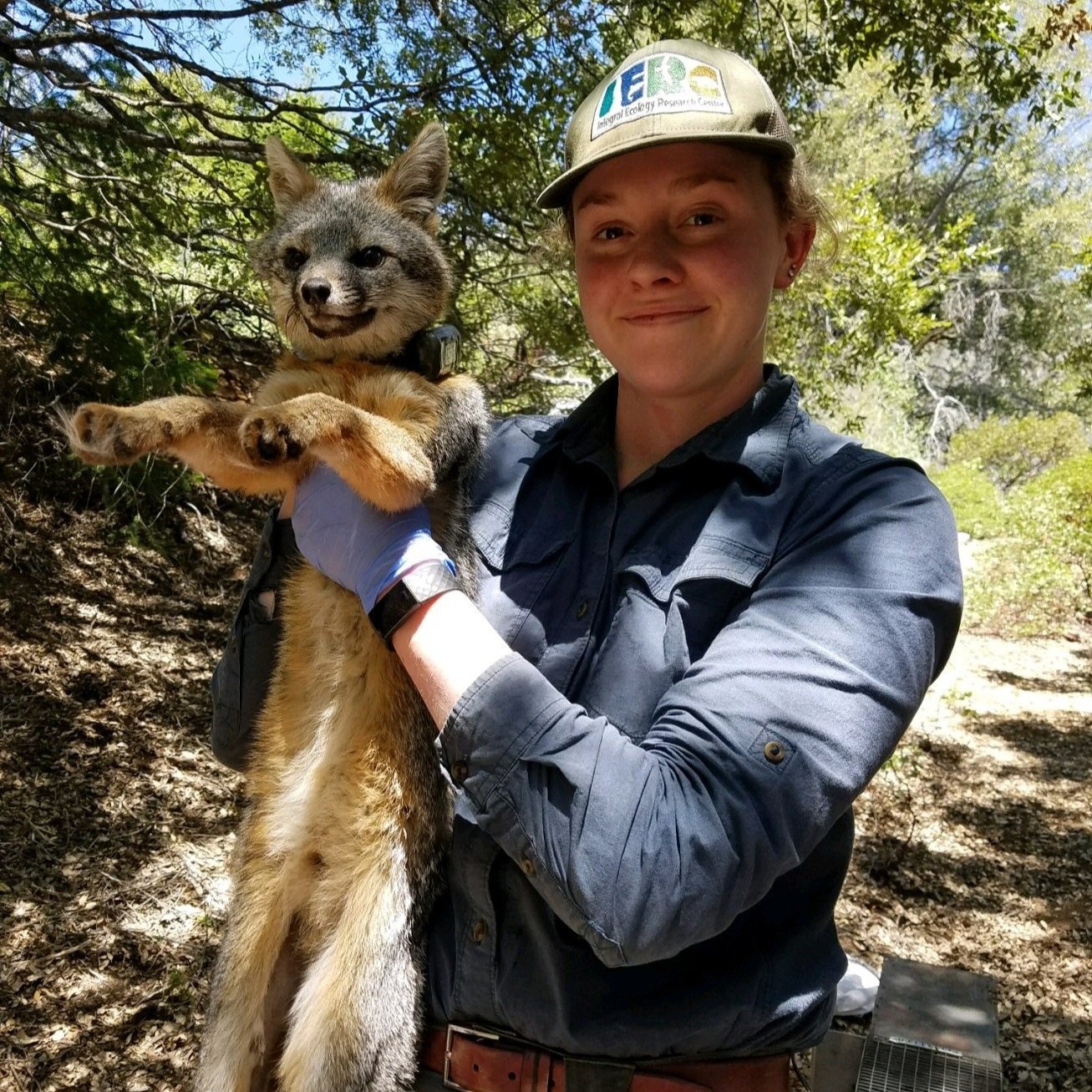
Dr. Emre Can shared experiences from his own work in human-wildlife conflict, which provided unique and valuable insight. Also, my class was composed of wildlife professionals around the world and across multiple disciplines, which contributed to lively and informative discussions. I highly recommend this course to those interested in developing skills to deal efficiently and effectively with human-wildlife conflict!
Haley Jones
Human Wildlife Conflict Specialist for the California Department of Fish and Wildlife
SCHOLARSHIPS
Full scholarships are available to participants from countries designated as “lower income” and “lower middle income” in the World Bank List of Economies. Please see our CWS World Scholars Program page for details.