
 Image 1 of 1
-
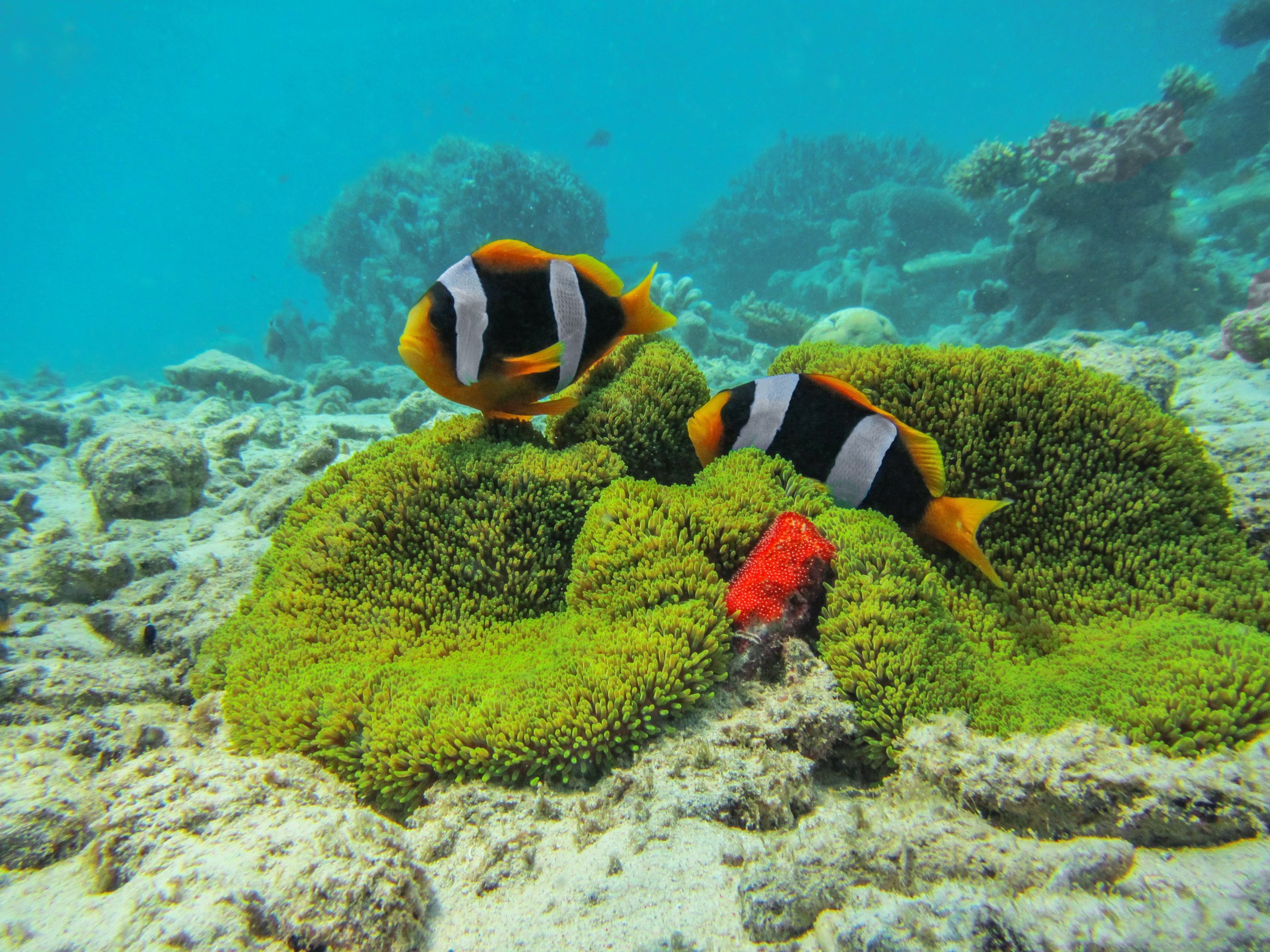
The ocean covers 2/3 of our planet’s surface and represents 99% of livable habitat. It’s home to hundreds of thousands of species—and that’s just the ones we know about so far! As a vital source of food, climate regulation, and commerce, what happens to the ocean has a massive impact on humans. This 3-unit course will introduce you to the fundamentals of marine biology, including the challenges facing life in water, an overview of key habitats, and a survey of marine biodiversity. Throughout it all, we will focus on how scientists study these systems.
Unit 1: Introduction and Fundamentals of Marine Biology focuses on preparing you for your future studies of marine systems. It will include brief introductions to marine chemistry, oceanography, the physical environment of the ocean, and how life in the ocean faces different challenges than the land-based life you may be more familiar with. It also includes a history of the field and how marine biology became a modern professional science. These fundamentals are vital for learners to understand future discussions of habitats and biodiversity.
Unit 2: Marine and Coastal Habitats introduces learners to the wide variety of different types of habitats found in the ocean. The ocean isn’t all beaches and coral reefs; there are many distinct types of habitats, each with their own physical features, each representing their own challenges and opportunities for marine life. Tools used by scientists to access and study these habitats will be discussed.
Unit 3: Marine Biodiversity introduces learners to the wide variety of organisms that live in our ocean. Most people know dolphins and coral reef fishes, but a thorough marine biology education requires an understanding of lesser known organisms like anemones and sponges and arrow crabs and salps. You’ll also learn how these organisms adapt to life in water, how they eat, move, and reproduce, and how they interact with each other. Tools used by scientists to study each group of organisms will be discussed throughout. By the end of all three units, learners will be able to take an unknown marine organism and be able to deduce information about its biology and ecology.
-
Learn at your own pace (see Online Course Format Chart below for details).
Spring 2027: The first 5 weeks of each unit include instructor support.
Unit 1: January 19 - May 2, 2027
Unit 2: Feb 21 - June 6, 2027.
Unit 3: March 28 - July 11, 2027.
Early bird discount of $75 on Standard, $85 on Premium ends December 20, 2026.
-
This is a 3-credit course, consisting of three 1-credit units that may be taken together or individually. You may register for 1, 2, or all 3 units. Select the units during registration.
Each unit has 5 weeks of self-paced instruction with instructor support. After the 5-week period ends, learners have access to material on Canvas for an additional 10 weeks.
-
This course has no specific prerequisites but assumes a basic knowledge of life science and chemistry. It is broken into three units that are recommended to be taken in sequence.
-
Unit 1: Introduction and Fundamentals of Marine Biology
Describe some challenges of living in water and of humans studying life in the ocean
Describe basic principles behind different strategies for adapting to life in water
Discuss the definition of marine biology and of the fields of science that it overlaps with and describe the principles that make it a distinct field of science
Apply your understanding of the challenges of studying life in the ocean to experimental design
Analyze experimental designs and create your own
Unit 2: Marine and Coastal Habitats
Describe and compare different types of marine habitats and where they can be found
Describe and compare nearshore and shallow habitat types
Describe and compare offshore and deeper water habitat types
Apply that knowledge to determine specific challenges facing life in these types of habitats.
Analyze research approaches for studying life in these systems, and create your own research plan
Unit 3: Marine Biodiversity
Describe and compare key principles of marine biodiversity and ecology
Describe and compare different major groups of marine invertebrates and vertebrates
Apply that knowledge to determine specific challenges facing life from these groups and how they’ve overcome those challenges
Analyze research plans for studying these animals and create your own.
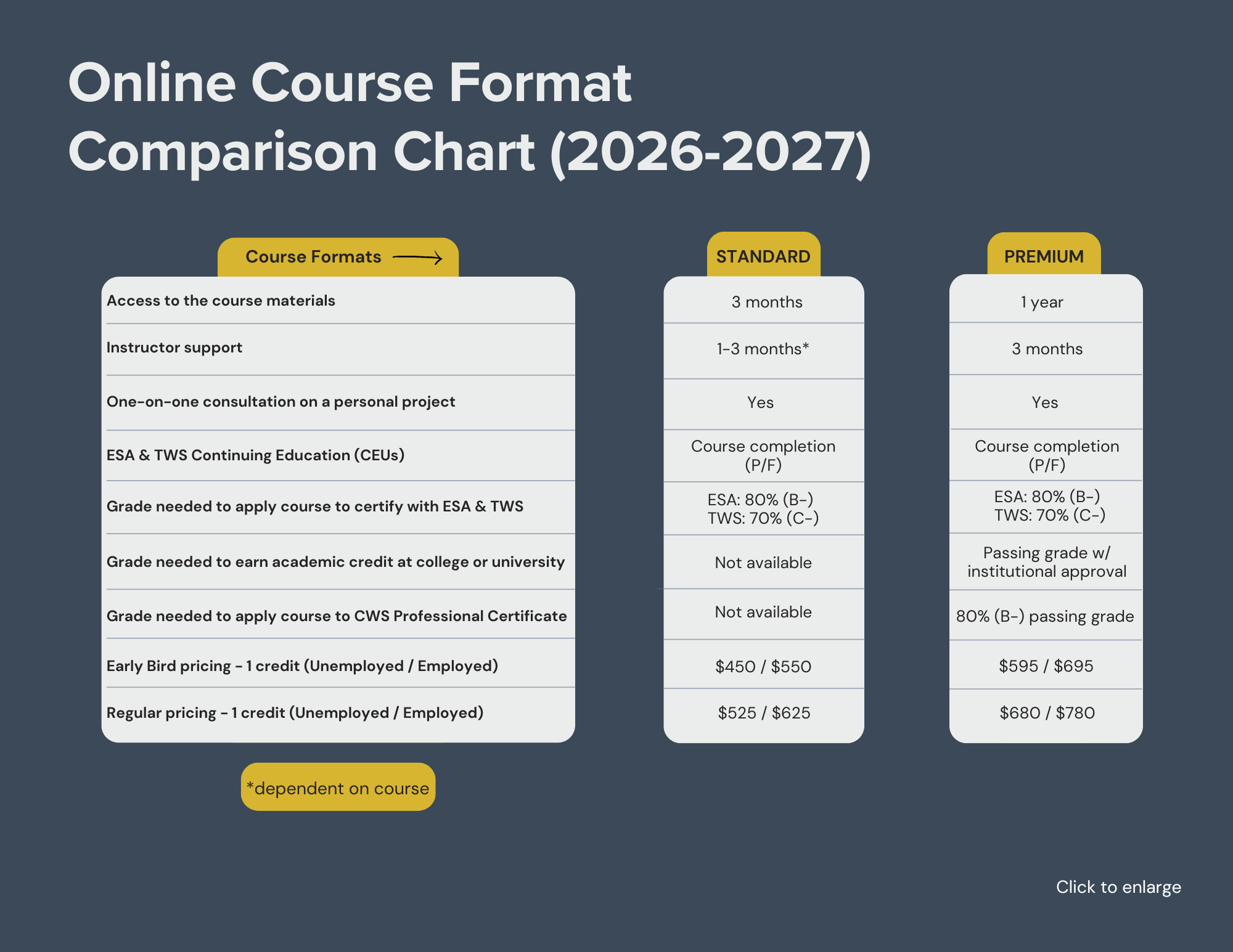
COURSE OPTIONS & INFORMATION (Review chart above, then click below)
-
FORMAT:
15 weeks of access to course materials as you work at your own pace
Get instructor support for the first 5 weeks of each unit via email, discussion threads, group meetings, and one-on-one appointments
After working through the course materials, set up an optional meeting with the instructor to discuss your own personal project from work or school
CONTINUING EDUCATION:
16 CEUs with The Wildlife Society
CERTIFICATIONS:
Earn 1 credit toward certification as an Associate/Certified Wildlife Biologist® (at any level) with The Wildlife Society
-
FORMAT:
12 months of access to course materials as you work at your own pace
Get instructor support for the first 5 weeks of each unit via email, discussion threads, group meetings, and one-on-one appointments
After working through the course materials, set up an optional meeting with the instructor to discuss your own personal project from work or school
CONTINUING EDUCATION:
16 CEUs with The Wildlife Society
Go to our Continuing Education Page for more details
CERTIFICATIONS:
Earn 1 credit toward certification as an Associate/Certified Wildlife Biologist® (at any level) with The Wildlife Society
ACADEMIC CREDIT:
Earn 1 academic credit per unit (go to our Academic Credit page for details)
Earn an additional 1-2 academic credits with an Applied Project

INSTRUCTOR
SCHOLARSHIPS
Full scholarships are available to participants from countries designated as “lower income” and “lower middle income” in the World Bank List of Economies. Please see our CWS World Scholars Program page for details.
CANCELLATION POLICY
Cancellations 30 days or more before the start date are not subject to cancellation fees. Cancellations <30 days before the start date are subject to a 50% cancellation fee. No refunds once the course begins.